Working Capital · General
Working Capital: Meaning, Formula and Practical Use
Working capital is a snapshot of the short-term resources available to run the business day to day.
Working capital is commonly calculated as current assets minus current liabilities. It provides a snapshot of short-term resources available to support day-to-day operations.
What goes into it
Current assets may include cash, receivables and inventory. Current liabilities may include trade payables, accrued expenses and short-term obligations. The precise classification depends on the applicable accounting framework and the company's circumstances. Use the working capital calculator to work it out from your balance sheet.
A positive number is not a guarantee
Positive working capital can indicate a short-term liquidity buffer, but it does not guarantee that the business has enough cash. Inventory may be slow-moving and receivables may be overdue. A company can report positive working capital while still struggling to meet payments on time.
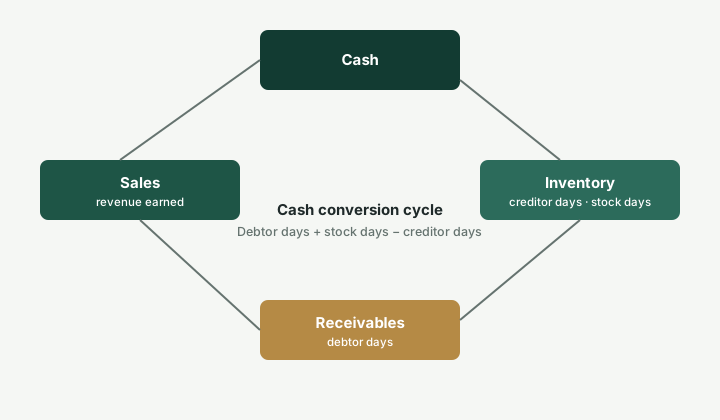
What to track
- Debtor days: how long customers take to pay.
- Inventory turnover: how quickly stock sells.
- Creditor days: how long you take to pay suppliers.
- The cash conversion cycle, which combines the three.
- The current ratio and quick ratio.
Review the quality and timing of current assets, compare trends over time, and compare against businesses with similar operating models. Pair the numbers with a cash flow forecast.
Frequently asked questions
Can working capital be negative?
Yes. Some businesses that collect cash quickly and pay suppliers later run with negative working capital by design, but it needs careful management.
Sources
- IRS Publication 538: Accounting Periods and Methods, Internal Revenue Service
- US Small Business Administration: Manage your finances, US Small Business Administration
- IFRS Foundation, IFRS Foundation
Educational information only, not individual financial, tax, legal or accounting advice. Read the disclaimer.
Discussion (0)
No comments yet. Be the first to add a question or a practical experience.